a ‘Hippie Heart’ fashions a Movement
BY ANGELA BARBUTI
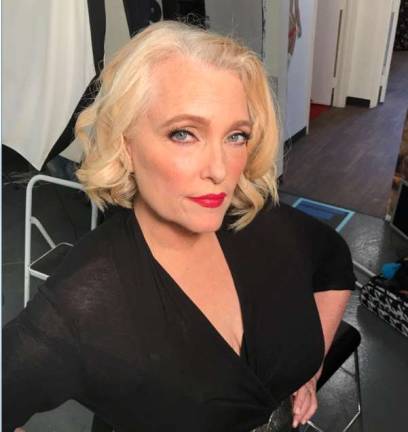
Catherine Schuller was hired as one the first plus-size models in New York and went on to make a career out of helping women accept their bodies.
The Pittsburgh native came to New York in 1975 with her boyfriend at the time, drummer Billy O’Connor, who would keep the beat for the band Blondie in its formative years. Schuller quickly got swept up into the Lower East Side punk rock scene at CBGB and Max’s Kansas City. “I was trying to be a model and an actress and of course, the whole thing in the ‘80s was you had to be thin. So I was told, “You did a great audition; could you lose 70 pounds?” And I didn’t want to do that. My hippie heart was like, “I’m fine the way I am.”
In response to that resistance, she created a comedy troupe called The Nerve, crafted around the idea of having the nerve to just be yourself. One night, a scout came backstage and suggested Schuller try plus-size modeling, to which she responded that she never heard the words “plus-size” and “modeling” together in the same sentence.
Schuller was signed with the special sizes division of Ford Models in 1988, when the plus-size industry was still in its infancy. “We created a movement; we were large, loud and proud,” she said. This was the beginning of her life’s work. In the late ‘90s, “Mode” magazine asked her to be their fashion retail editor, and there she created the program “Mode on the Road” and toured through hundreds of cities, hosting and styling full-figured fashion events.
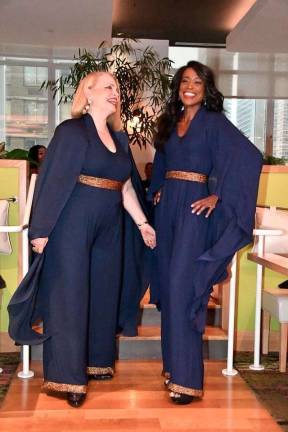
She now teaches a plus-size course at FIT and hosts “Runway the Real Way,” a monthly fashion diversity brunch she started at the Yotel Hotel. Another passion project of hers is honoring her late husband, Marvel Comics exec Mark Gruenwald, whom she met on an audition for “She-Hulk,” with the release of his biography next year.
What was the Lower East Side punk rock scene like? When I brought Billy here, we were kind of hanging out with the Warhol crowd, so that showed me a lot about if you’ve got a creative idea, you could pretty much just get out there and do it. Debbie Harry was very instrumental in teaching me how to take your career by the horns and just do what you need to do and invent yourself. And that was great about that scene because it was wide open. There was no internet, so you had to get out there, meet people face to face, hang out, play, support each other. I don’t think we’ll ever be able to have a scene like that again, where it’s just an artist community of people all like-minded and not trying to outdo each other, but on the same wavelength. It was this whole new wave and I just got swept up in it. I was from Pittsburgh and really always wanted to have that kind of idealistic romantic beat poet scene in my head. And that was kind of the equivalent of it.
Another interesting part of your bio is that you lived in Manhattan Plaza, which was Section 8 housing for artists. We all moved in there because Ronald Reagan decided that middle class kids who were artists were not going to turn it into slum housing and would take care of it. He made it Section 8 housing and we paid 30 percent of our income. Angela Lansbury was on my floor. Jaimie Alexander, Larry David. All these artists and people just coming up in the field. It was a big community. And then AIDS hit, so we had to bury a lot of people too in the mid ‘80s.
Tell us about signing with Ford Models. I was doing The Nerve, and a scout for Plus Models Agency came backstage and said, “You should do this thing called plus-size modeling.” And I was like, “You should write for my act, because I never heard the words plus-size and modeling together.” And they said, “No, it’s this big thing coming up and you’d be perfect for it. You might even have to pad up.” I was about 168 pounds and 5’10’’ and thought, if I didn’t have to lose weight, it would be perfect. The industry was in a pretty sorry state, but it was the beginning, and Liz Claiborne came on board, so we had a designer who was designing clothes for us. It was the beginning of the movement to diversity and body acceptance. And I said, “This is perfect for me.” so I became kind of the spokesperson for the plus-size movement. They were about 68 models and there was a lot more work because there were less of us and there were a lot of catalogs, circulars and newspaper ads. There weren’t any magazines, but we had a lot of fashion and runway shows. There were times I was the only plus-size model in a runway show.
What was it like to be the only plus-size model in a show? What kind of reaction did you get?I would get all this applause and standing ovations. And the models came back and said, “What are you doing out there, cartwheels?” And I said, “No, they just see themselves and it’s almost like that is a feminist issue.” I was an activist; I was up there representing. It was pretty exciting and I said, “I think I’m onto something here.” It became my destiny to allow everyone to feel fabulous no matter what their size, age, shape or height. And that’s where I got bitten by the diversity bug. And then “Mode” magazine saw me and asked me to become their fashion retail editor, so I did “Mode on the Road” for five years while the magazine was still in existence. And I went around the United States, and heard things like, “The magazine saved my daughter’s life.”
You also teach one of the only plus-size courses at FIT.I call it “The Long and the Short of It,” because my partner’s petite and I’m plus, so we teach what the size spectrum is. It’s called “special sizes” in the garment industry. I’ve been doing that for six years. And we launched “The Business of Curves” on November 15th, as a one-night only state of the plus-size industry. Our intention is to create a certificate program or module or even a minor in plus sizes with the curriculum and course material specifically focused on the full-figure body types. We can take that on the road to other design schools too.
www.runwaytherealway.com