‘living biblically’ in manhattan
Can one live biblically on the Upper East Side?
At first blush, the answer is no. How could anyone love thy neighbor when he or she is shoving you out of the way on the Q or 6 trains, trying to cut the line at Fairway or knocking the back of their chair against yours at, well, pick any Second Avenue restaurant.
Then I watched the new CBS sitcom “Living Biblically” and began to wonder.
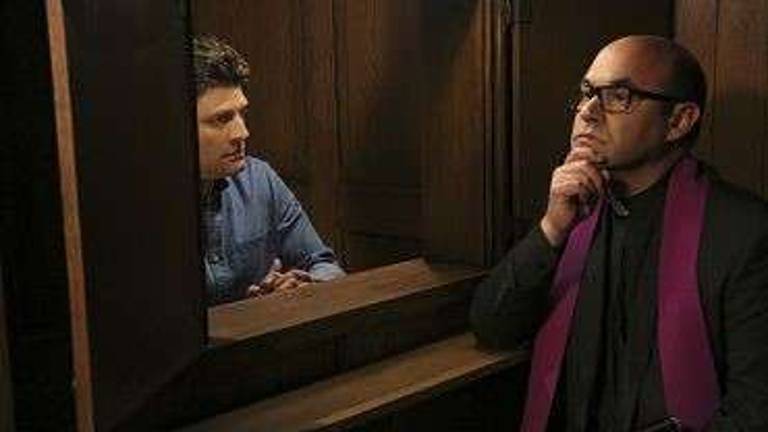
The show is adapted from a book, “The Year of Living Biblically” by A.J. Jacobs. The sitcom is about “Chip” (Jay R. Ferguson), a Manhattanite who wants to be a better man and vows to follow the Good Book to the letter. A challenge? Oh yeah. Even his priest, (Chip is a lapsed Catholic in the show), thinks this is ridiculous.
Just as anti-gun activists argue that the Second Amendment was written when people walked around with muskets to protect themselves, their land and their freedom, not to mention that if they wanted dinner they had to shoot it, “Father Gene” (Ian Gomez) explains that times have changed since the Holy Scriptures were penned. When Chip confesses he no longer wants to keep the confidences of a cheating co-worker, the pastor advises that he not choose “stoning” — the Bible’s go-to punishment for those who have extramarital affairs — because nowadays assaulting an officemate with rocks will most likely result in jail time. So Chip persists, working within modern day parameters.
We follow his transformation to a what-would-Jesus-do practitioner at home with his pregnant wife, at work with his quirky colleagues and at the bar where he hangs with his own personal “God Squad,” Father Gene and his pal, Rabbi Gil (David Krumholtz). Indeed, the obvious “a priest and a rabbi walk into a bar” joke has its fifteen seconds of fame.
By the end of the first episode, Chip has gotten a raise, because his boss likes the new energy his life decision has brought to the company, and his adulterous friend is grateful that Chip renounced his behavior because it led to him and his wife going into marriage counseling.
That’s where the show lost me. Not only were the results of Chip’s efforts immediate, but they were appreciated. Hard to come by in NYC.
Without making a pronouncement, or perhaps without even realizing it, a lot of us try to live biblically. We hold the door at the post office, and suppress the feeling to shout, “You’re welcome” to the person for whom we’ve just played doorman without so much as an acknowledgment. We don’t engage, but get off the bus or change seats when another rider — clearly looking for a fight — chooses as their sparring partner our toddler who is not sitting quietly enough to suit them. Then there’s the blowhard at the supermarket who we let go ahead of us because no one should be that stressed by buying bread, and the sooner he’s gone, the more pleasant the wait will be for everyone else.
No miracles here. No souls saved. No bids for sainthood. Just trying to get through the day doing what seems like the right thing. But unlike Chip, most of the time there is unfortunately no gratitude or immediate gratification. In fact, sometimes you get criticized.
The woman coming out of the post office behind me, who’d witnessed the ill-mannered person, chastised me with, “That’s what you get.” When I apologized for being late to another mother because my child and I had gotten off the bus a couple of stops early to avoid an abusive passenger, she turned competitive and shared the choice words she would have shot back. And at the grocery store, someone behind me wanted to know “what was wrong” with me for indulging the loudmouth complainer.
When trying to maneuver New York City, you can be damned if you do and damned if you don’t. To paraphrase Father Gene: If you want to be a kinder, loving human being, be one. The world needs more of those.
At least Manhattan does. Amen.
Lorraine Duffy Merkl is the author of the novels “Back to Work She Goes” and “Fat Chick,” for which a movie is in the works.